
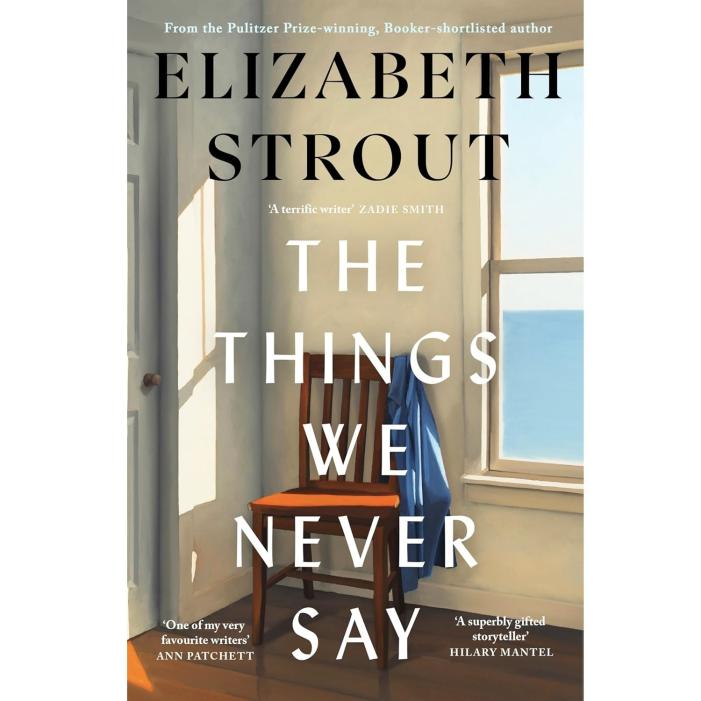
The Things We Never Say by Elizabeth Strout
Unlike several of her recent novels, which centred on the recurring characters of Lucy Barton and Olive Kitteridge, the latest from Elizabeth Strout is a stand-alone work that captivates right from the off. The story follows Artie Dam, a high school history teacher in his late middle age who lives in a coastal town on Massachusetts Bay. On the surface, his life is stable and idyllic: he has been married for thirty years, enjoys a respected career (and the admiration of his students), and he spends his weekends sailing. However, beneath this veneer, Artie is grappling with profound isolation, and he often wonders aloud if humans have free will. It’s a narrative set against a backdrop of contemporary American anxieties – specifically the tension surrounding the last presidential election (Trump is the spectre haunting the text but is never named) – which heightens the characters’ sense of a world gone mad. Artie’s life is knocked further out of kilter when he learns of a long-standing secret. ‘The Things We Never Say’ has something of Jean-Paul Sartre’s existential classic ‘Nausea’ swirling about it. The parallel to Roquentin (the protagonist of ‘Nausea’) is particularly sharp in the way Artie experiences his own “double life”. Both characters suffer from a visceral awareness of the gap between the world’s physical reality and the meaning we try to impose on it. Artie’s life – the sailing, the lectures, the marriage – is his “shell”, and it’s his efforts to emerge from this mental prison that give the novel such heft. RM
Published by Penguin

Sign Up To Little Crack