
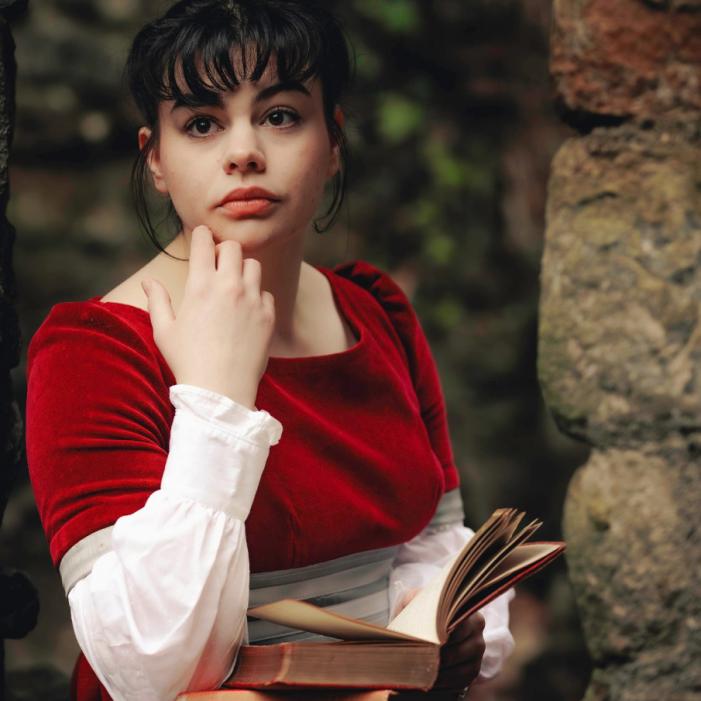
Mary Shelley at People's Theatre
I am, first and foremost, a literature nerd, so when I heard that the latest show at the People's Theatre was all about the life of Mary Shelley, I jumped at the chance to see it. As the daughter of two of the biggest political philosophers of the 18th century, Mary had a mind built for writing, but this play provided a look at the woman behind the words. As we follow her through her elopement with married poet Percy Shelley and the scandal that comes after, we begin to see the radical influences that shaped Frankenstein and her other works.
Both radical and ordinary women are at the heart of this story, all of them haunted by the memory of Mary's mother, Mary Wollstonecraft, whose feminist writings and turbulent past heavily shape each woman's perception of themselves and what a woman can be. This is especially true of the three sisters, Mary, Fanny and Jane, at the centre of the show. Holly Stamp gave a powerful performance as Mary - even through grief and heartbreak, Mary has such a clear sense of who she is and what she wants, which Holly portrayed beautifully. Ashton Matthews broke my heart as Fanny, leaving the audience anxiously waiting for someone to recognise the pain and stress written on her face, but nobody did until it was too late. Each time the three sisters were together, I desperately wanted to hold them in those gentle moments and not let go.
None of the characters are ever two-dimensional cliches, and none of their views go unchallenged. Anna Dobson’s performance as Mrs Godwin defied the category of wicked stepmother, encouraging the audience to look at her without Mary’s eyes and see a woman with a terrifying past that she does not want to see become her and her daughters’ future. She shifts from comedy to sincerity and back again with ease.
The play doesn’t provide easy answers. Mary isn’t wrong for following her heart and leaving her family behind for the life of poetry and radical thinking represented by Percy Shelley, but neither is Fanny wrong for staying to care for everyone. It raises urgent questions: when is it necessary to compromise your ideals for the people you love? What does it mean to be a radical woman? Who is left to pick up the pieces left behind by those living ‘freely’? I can’t wait to see more from the team at People’s Theatre.
Lily Tibbitts

Sign Up To Little Crack